
Canada

POVERTY
Due to the effects of colonization and systemic barriers, 48 per cent of Indigenous households have difficulty putting enough food on the table.

HEALTH ISSUES
Indigenous children and adults experience health issues in excess of the national averages, including three times the rate of both Type 1 and Type 2 diabetes.

FOOD INSECURITY
The price of healthy foods in many First Nation communities is much higher than in urban centres, and is therefore beyond the reach of many families.
These statistics are from the First Nations Food, Nutrition and Environment Study.

SCHOOL NUTRITION PROGRAM
Up to 50% of First Nations children living on reserve go to school hungry every day. The social and health impacts are staggering. Kinvia supports community-led nutrition programs in Canada on school and after-school meals and snacks, which reduce child and youth hunger, promote healthy eating at school and at home, and contribute to better educational performance.

NUTRITION EDUCATION
Nutrition education focused on traditional foods and reinforced the connection between food and culture in a restorative and healing way. Community-driven initiatives like cooking classes, feasts, and community kitchens foster learning. Celebrating the social and cultural ties of community by bringing together children, youth, parents, teachers, and Elders.

Land-Based Education
Honouring the Indigenous relationship to the land and to traditional practices of harvesting, hunting, fishing, preparing and preserving food teaches valuable skills that have been lost as a result of colonization. The inter-generational transfer of knowledge about traditional practice from Elders to children and Youth instills increased pride in Indigenous identity and restores the essential connections between culture and healthy living.

LOCAL FOOD SYSTEMS
School, home, and community gardens improve access to affordable fruits and vegetables, which is especially important in remote communities where fresh produce is often limited and costly. Communities are empowering themselves to develop sustainable local food systems that strengthen household resilience, paving the way for food sovereignty for future generations.

INDIGENOUS FOOD FORESTS
Food forests are self-sustaining spaces modeled on natural woodland ecosystems. Trees, shrubs, perennials and annuals provide food, medicines and greenspace for humans and a habitat for insects and wild animals. They provide a source of affordable, healthy food and reduce food insecurity for families in a growing number of Indigenous communities in Canada.
507,813
snacks and meals provided1,064
new trees and bushes planted in 4 food forests19
Indigenous communities
School Nutrition
1,856
meals provided for children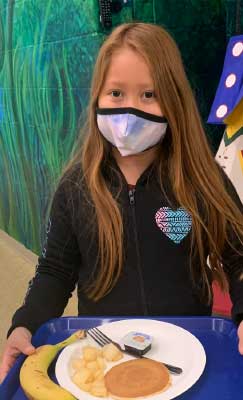

Local Food Systems
405
gardens established / supported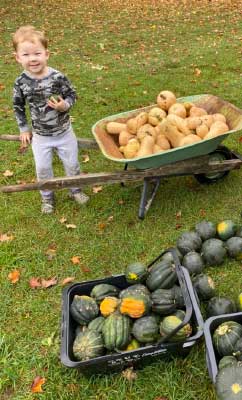

Land-Based Education
1,474
people engaged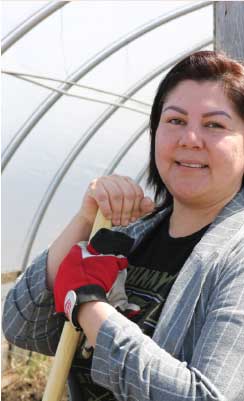

Nutrition Education
2,095
people trained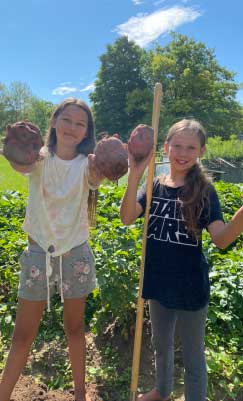
The team for Canada
Staff for our Canada team are an essential link between the community's self-identified development priorities and the resources available to make them happen.
Sydney Richards
Director Of Indigenous Partnerships & Programs
Brenda Aviles
Interim Director, Indigenous Partnerships and Programs
Kinvia collaborates with Indigenous communities across Turtle Island to achieve community-led results. Currently, programming is active in 19 Indigenous communities
- Ahtahkakoop Cree Nation, SK
- Beardy's & Okemasis' Cree Nation, SK
- Biigtigong Nishnaabeg, ON
- Clearwater River Dene Nation, SK
- Elsipogtog First Nation, NB
- Esgenoôpetitj First Nation, NB
- Montreal Lake Cree Nation, SK
- Muskeg Lake Cree Nation, SK
- Natoaganeg First Nation (Eel Ground First Nation), NB
- Neqotkuk (Tobique First Nation - Mah-Sos)
- Neqotkuk (Tobique First Nation - Perth-Andover)
- Neyaashiinigmiing (Chippewas of Nawash Unceded First Nation), ON
- O-Chi-Chak-Ko-Sipi First Nation, MB
- Red Rock Indian Band, ON
- Sayisi Dene First Nation (Tadoule Lake), MB
- Stein Valley, BC
- Thompson Boys and Girls Club, MB
- Wasagamack, MB
- Whitefish Lake First Nation (Atikameg), AB

"As the world has evolved over the years, we have deepened our commitment to learning, adapting, and challenging our own long-entrenched ways. We're grateful to all those whose teachings and insights have informed and guided this journey. Their input gave rise to our commitment to evolve the organization to what it should strive to be: decolonized, anti-racist, and anti-oppressive. An organization whose mission, vision, and values reflect the understanding that we are all equal, and all kin."JACQUELYN WRIGHT, PRESIDENT & CEO, KINVIALearn more
 |
Provide students in Indigenous communities with nutritious, healthy, and culturally appropriate meals each day. |
 |
Support access to plenty of fresh and whole foods so that children can learn effectively in schools. |
 |
Ensure families have access to affordable, healthy produce through community-generated and maintained activities such as gardens and community kitchens. |
 |
Support programming for children, parents, teachers, and Elders to collaborate and learn culturally appropriate, healthy nutrition choices. |
 |
Work with communities to support their self-determined goals related to food sovereignty, and reconnection of the land and cultural traditions. |