
June 23, 2026
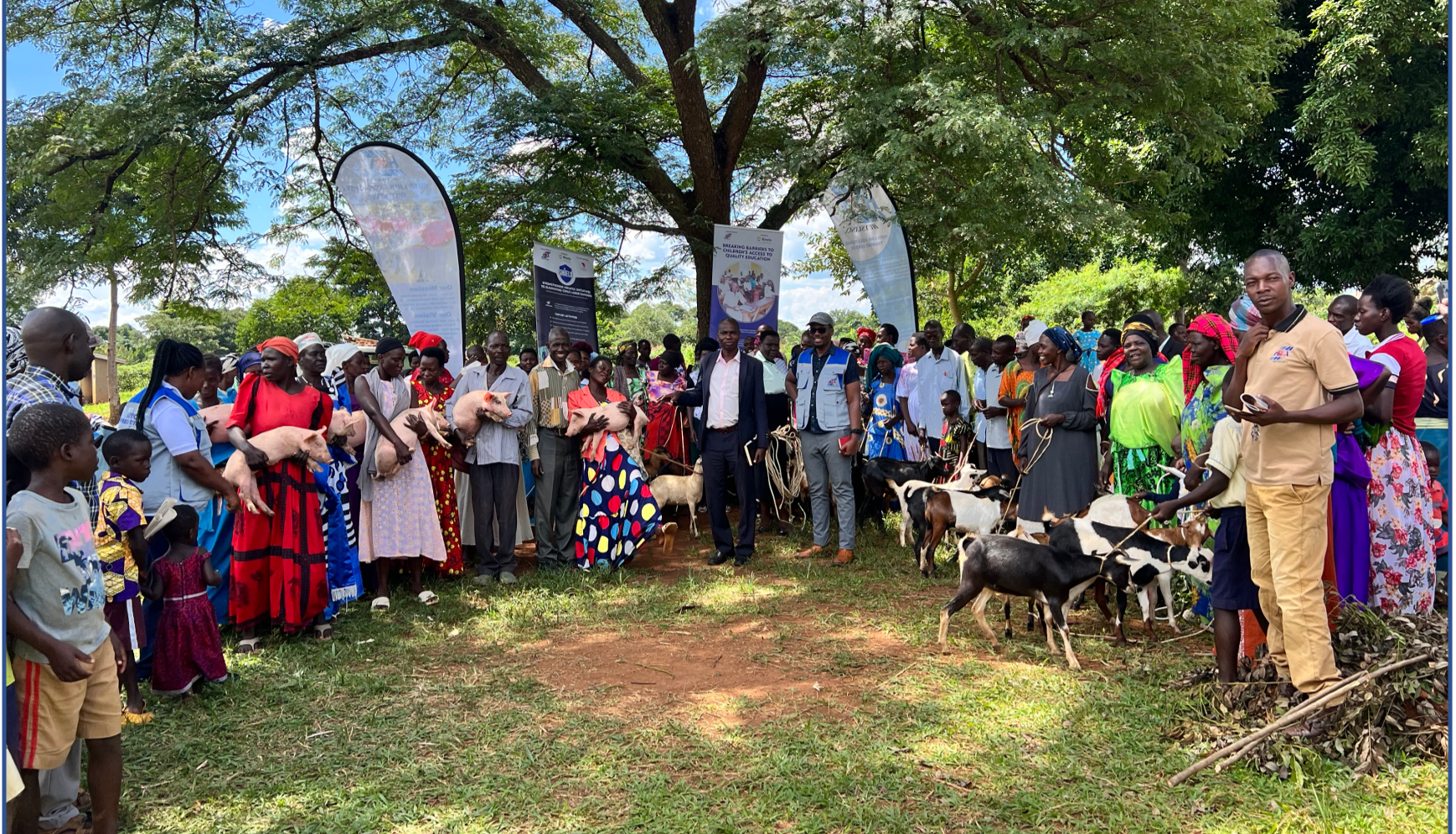
Photo: Livestock distribution during the official launch of the income-generation portion of a HUYSLINCI project in Kamuli District, Uganda.
When families struggle to meet their basic needs, children are often the first to pay the price.
Across eastern Uganda, poverty and economic insecurity continue to drive child labour, with some children leaving school to work in sugarcane fields or taking on other forms of hazardous work to help support their families.
Protecting children requires more than enforcing child labour laws. It means strengthening the families and communities that care for them.
Working with local leaders, schools, child protection committees, and families, Kinvia's local partner, Huys Link Community Initiative (HUYSLINCI), is helping communities tackle the root causes of child labour. Livelihood training, Village Savings and Loan Associations (VSLAs), livestock pass-on initiatives, parenting support, and community awareness activities work together to reduce the economic pressures that place children at risk while improving their family’s ability to keep them safe, healthy, and in school.
Growing More Than Vegetables
Gladys understands how quickly one opportunity can grow into many.
A volunteer teacher at her local early childhood development centre, she learned vegetable growing techniques there and brought them home to her own family. She transformed a small plot beside her home into a thriving garden that now provides nutritious food for her family while generating regular income through weekly vegetable sales.
The garden has become both a reliable source of nutritious food and a second source of income, allowing Gladys to contribute more to household expenses and savings.
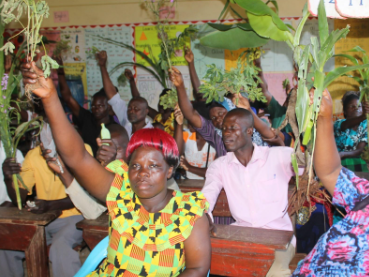
I will tell you that my husband shows me much more love than he used to and I think it is because of me doing something that contributes to our family
Passing On Her Knowledge
Gladys didn't keep what she learned to herself.
Her vegetable garden has become an informal training centre where other women come to learn modern cultivation techniques. So far, Gladys has trained 12 other mothers, helping them establish productive gardens of their own. Her experience is part of a much broader ripple effect. Across the program, more than 30 households have begun passing on their knowledge to others, with each trained farmer teaching an average of four additional people.
Together, they are spreading practical skills that improve food security, strengthen livelihoods, and benefit children and families throughout their communities.
From Stronger Livelihoods to Stronger Childhoods
As more families build reliable sources of income, they are better able to meet their children's basic needs, pay school expenses, and plan for the future without relying on children's labour.
That economic foundation is reinforced by stronger community systems. Parents, teachers, child protection committees, local leaders, and law enforcement officials are working together to identify children at risk, promote the importance of education, and respond when children are found working in hazardous conditions.
The results are already visible.
Forty children have been removed from hazardous work in sugarcane fields and supported to return to school, while communities are taking greater responsibility for protecting children's rights.
"We are actively on the lookout for children working in sugarcane fields during school days, and we are not going to stop these crackdowns until this practice is completely eliminated," says the mayor of Kawaga Parish. "Those exploiting children will be held accountable."
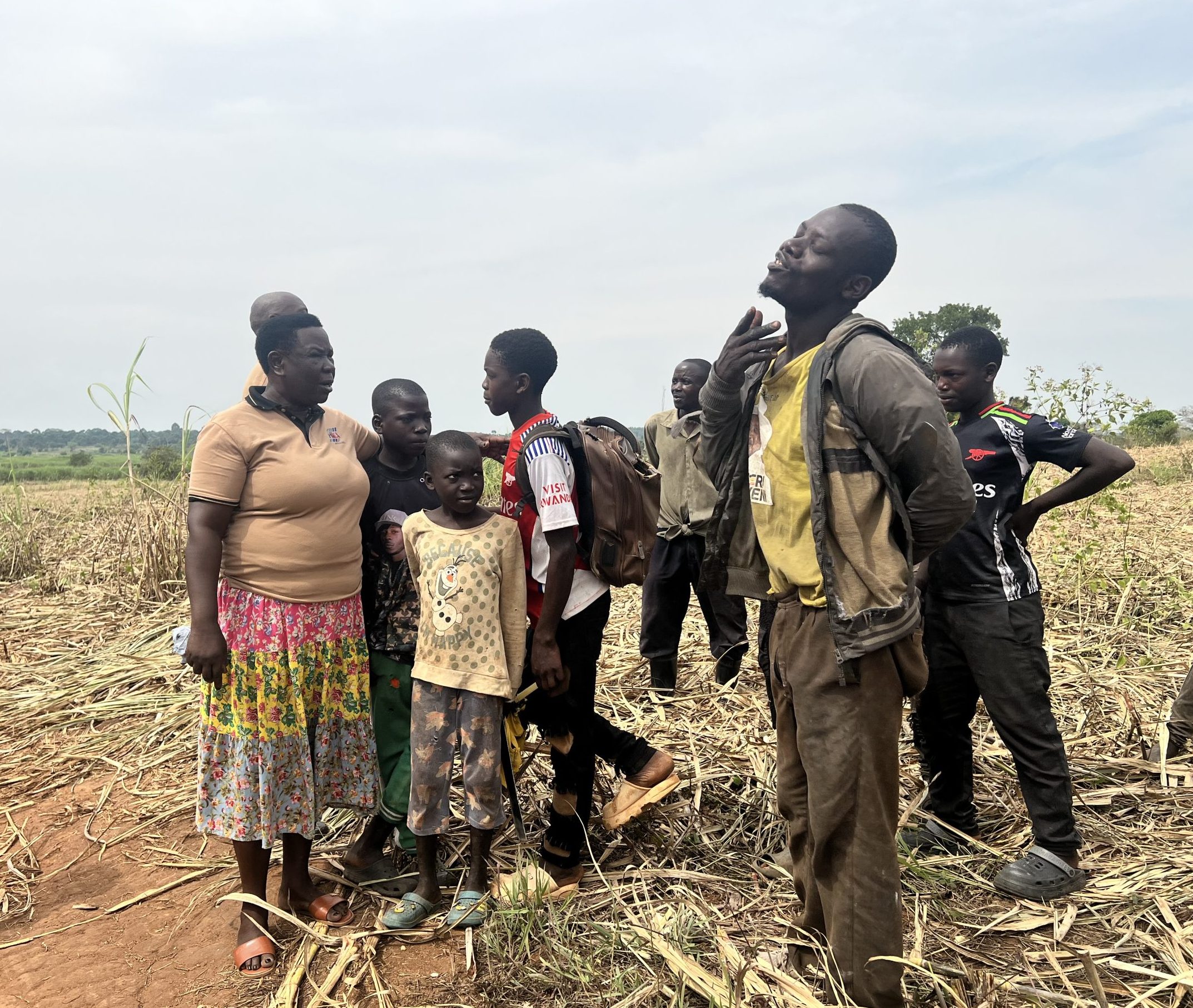
Community members involved in child labour prevention efforts standing in a sugarcane field, Uganda.
The mayor's determination reflects a broader shift taking place across the community. Child labour is no longer seen simply as an unfortunate consequence of poverty, but as a challenge that families, communities, and local leaders can address together.
Gladys's vegetable garden may seem far removed from the sugarcane fields where children once worked. Yet they are connected. As knowledge, skills, and livelihoods pass from one household to the next, they create something that extends well beyond any single family. They help weave a community safety net that protects all children and gives more of them the opportunity to spend their days where they belong — in school.
The initiatives described in this article are generously funded by The Slaight Family Foundation's NGO Emergency Support Initiative. We are grateful for their support.


