
January 24, 2024
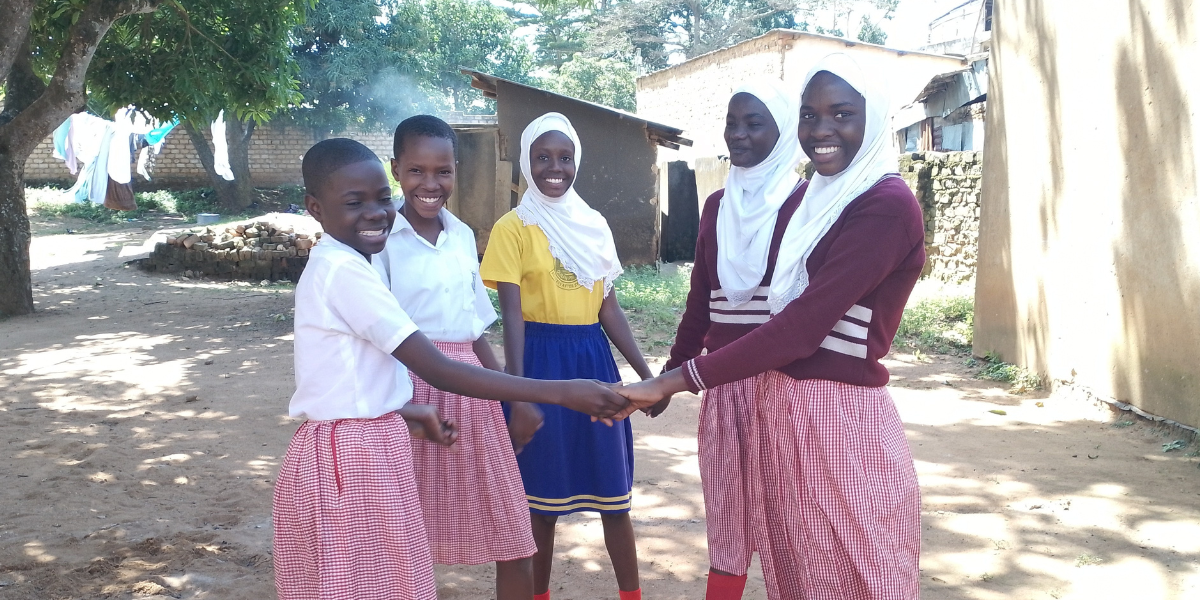
 Uganda is a landlocked country in east-central Africa known for delicious coffee and rich biodiversity from Lake Victoria to the Virunga mountains. Uganda gained its formal independence in 1962.
With the AIDS epidemic, years of conflict, and a poverty rate that has hovered around 30 percent, Uganda has also faced many challenges. In 2020, 1 in 3 Ugandans reported experiencing a period of poverty over the previous five years, while 1 in 5 considered themselves chronically poor.
Then, the COVID-19 pandemic caused rates to soar. Not only did the pandemic increase the number of families who found themselves struggling to survive, but it sent many families into more severe poverty. Now, the country faces a slow pace of economic recovery.
According to the World Food Programme (WFP), as of January 2023, 16.4 million Ugandans are struggling with insufficient food consumption. That’s an increase by 1.2 million people – many of whom are children – from the previous year. 29 percent of all children under five-years-old in Uganda face chronic malnutrition.
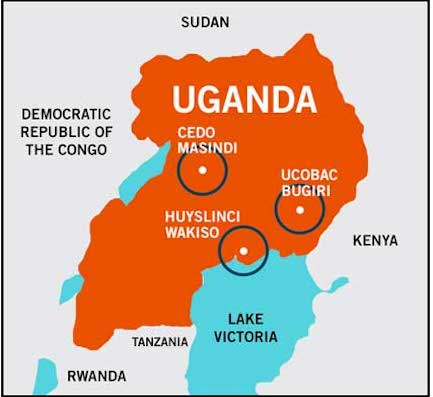
Where Kinvia works in Uganda
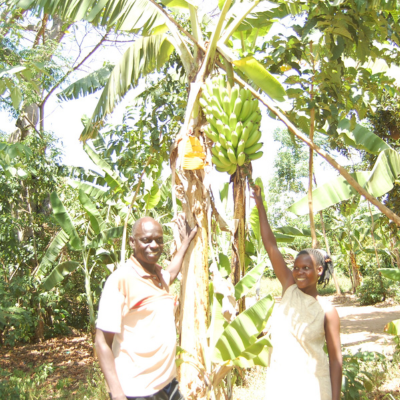
Kinvia works in partnership with three local organizations in Uganda to focus on climate-smart agriculture, children’s education and feeding programs, and women’s empowerment.
One of those partners, Uganda Community Based Association for Women and Children Welfare (UCOBAC), is located in the Bugiri District, a rural community in eastern Uganda. In much of eastern Uganda, the 2023 planting season was delayed by a month due to poor conditions. Many farmers who planted their crops too early lost them. Irregular rainfall, flooding and armyworm infestations also led to crop damage.
These big challenges all mean one simple thing: farmers in the Bugiri District can’t grow enough food crops to feed their families. Currently, in the Bugiri District where Kinvia works, more than 1 in 3 families do not have enough food to eat.
Our other partners in Uganda, Child Rights Empowerment and Development Organization (CEDO) located in the Masindi District, and Huyslink Community Initiative (HUYSLINCI) located in Entebbe and Wakiso District, both face similar challenges in the communities where they work. These regions' crisis levels of hunger are 34% and 32% respectively.
 The majority of Ugandans experiencing poverty work as farmers – with single mothers in rural areas struggling the most. This has been made worse by famine risk conditions. With erratic and unpredictable weather conditions becoming the norm for smallholder farmers, the pressure on food production will only result in more hunger without intervention.
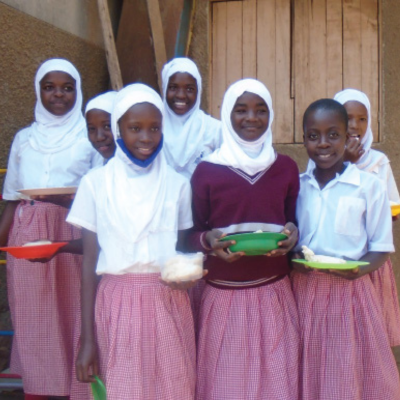
Right now, with your support, Kinvia is funding critical food programs for children at schools in these communities, making sure their nutritional needs are met. Our partners are on the ground training farmers in climate-adaptive farming practices so they can better withstand droughts, flooding and pests. And we’re working hand-in-hand with women in Uganda to learn new skills for alternative livelihoods, so they can become more financially resilient for their children.
Helping Children Where It’s Needed Most
Kinvia has always partnered with communities where children need the help the most. You can have a positive impact on children in Uganda. Click here to learn more about our work in Uganda and how you can support it.


