August 25, 2026
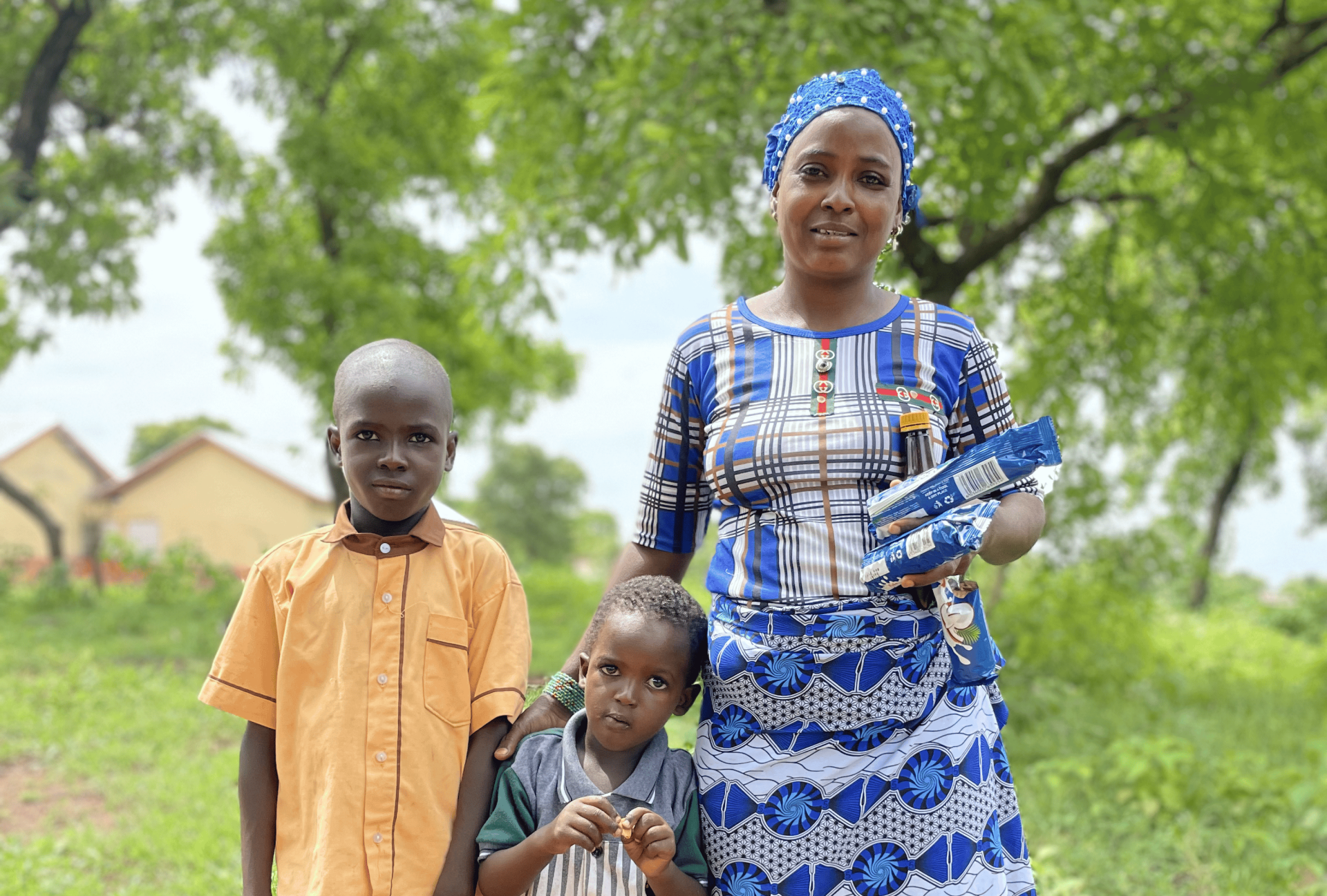
Photo: Ghana
Fulani families living in northern Ghana often face exclusion — from access to land and livelihoods to participation in community life and education. As pastoralists who have migrated to northern Ghana from neighbouring Burkina Faso and Nigeria, they live and work in communities where they do not hold ancestral land rights. As a result, they can be excluded from local decision-making, services, and development initiatives — barriers that contribute to poverty, food insecurity, and limited opportunities.
Kinvia and its local partner are working with Fulani families, traditional leaders, schools, and other community members to help Fulani residents participate more fully in community life.
For Sadia, that change began with an opportunity to farm a small plot of land of her own.
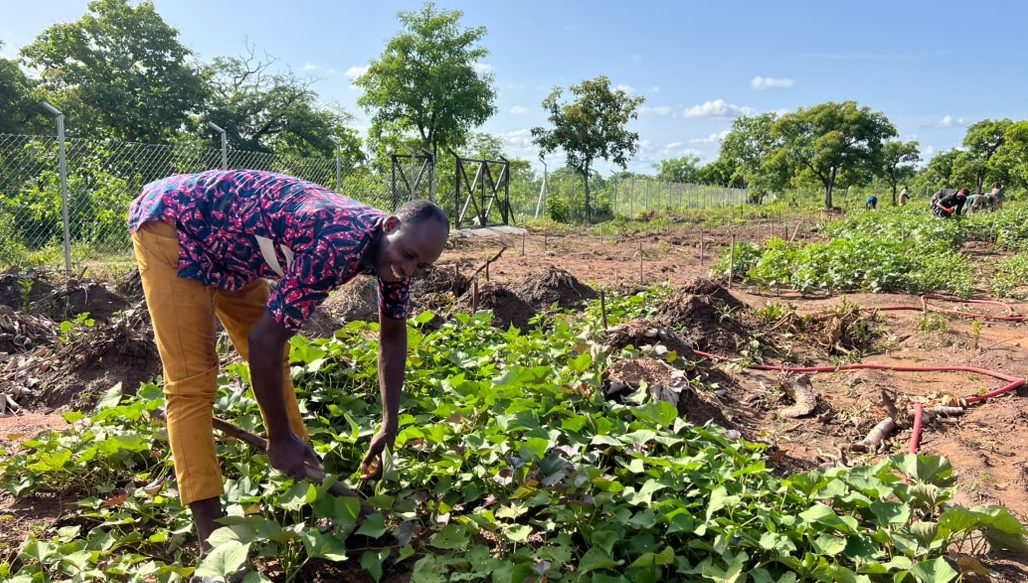
In 2025, community leaders allocated land to Sadia and another Fulani woman as part of a broader agricultural initiative involving 58 other local farmers. The group, comprised almost entirely of women, received training and farm inputs.
For the first time, Sadia was able to cultivate her own crop and expand beyond the subsistence living she was making selling milk and milk products from the cattle her husband was responsible for managing.
Sadia says that growing soybeans has helped supplement her family’s nutrition and improved her life in many ways. “I use the soybeans to prepare tubani, a local dish for my family. I also prepare soybean khebab for sale in my community where I earned extra income to buy ingredients and to buy books for my children in school.”
Her relationship with the neighbouring Bidima community has also changed. She is now invited to community and school meetings and has access to NGO and government programs that were formerly unavailable to her. A recent PTA meeting that she attended was “a real eye-opener for me,” as she participated in discussions about helping children learn at home during vacation, and even learned tips to save money to put towards school supplies.
She says she now has good relationships within the community, and feels supported by other more experienced farmers, who often stop by her farm to offer encouragement and share their experience with her.

I am learning a lot from the community women both in the farm and also managing my family for peace and unity.
Becoming more integrated in community life has opened up opportunities for Fulani children, too. Nineteen children from the Fulani settlement have now been enrolled in primary school, including two of Sadia’s children.
Her eight-year-old son, Farhan, is in Grade 1. Before enrolling, he helped his father herd cattle and his mother milk cows and sometimes accompanied Sadia when she sold milk by the roadside.
Now, he says, he looks forward to going to school, where his favourite subject is reading English. He’s made friends and he loves playing football with them.
“I was eager to start school and when I finally got enrolled, I was so excited. Waking up every morning to prepare and wear my school uniform to go to school is something I look forward to every night,” Farhan says. But entering school also meant entering a community in which Farhan knew he was different.
“I was a little hesitant whether other children will welcome me or will intimidate me since I was new in school and also different from them. But when the headteacher with the [School Management Committee] chairman introduced us to our class and teacher, they both spoke to the children to welcome us and treat us as their friends.”
For Farhan, those efforts have transformed uncertainty into a feeling of belonging.

I feel very comfortable and welcomed at school.
Sadia and Farhan both share big dreams. Sadia says she hopes to “see my children progress in their education and become great doctors, nurses and teachers in the future.”
And Farhan, for his part, shares the same goal: “I would like to be a doctor; I want to be able to treat people when they are sick.”
WANT TO LEARN MORE AND CREATE MORE OPPORTUNITIES FOR WOMEN AND CHILDREN?
- 🔗Learn more about how agricultural training and knowledge-sharing is creating lasting change
- 💛Give today to make a lasting impact.