
November 21, 2024
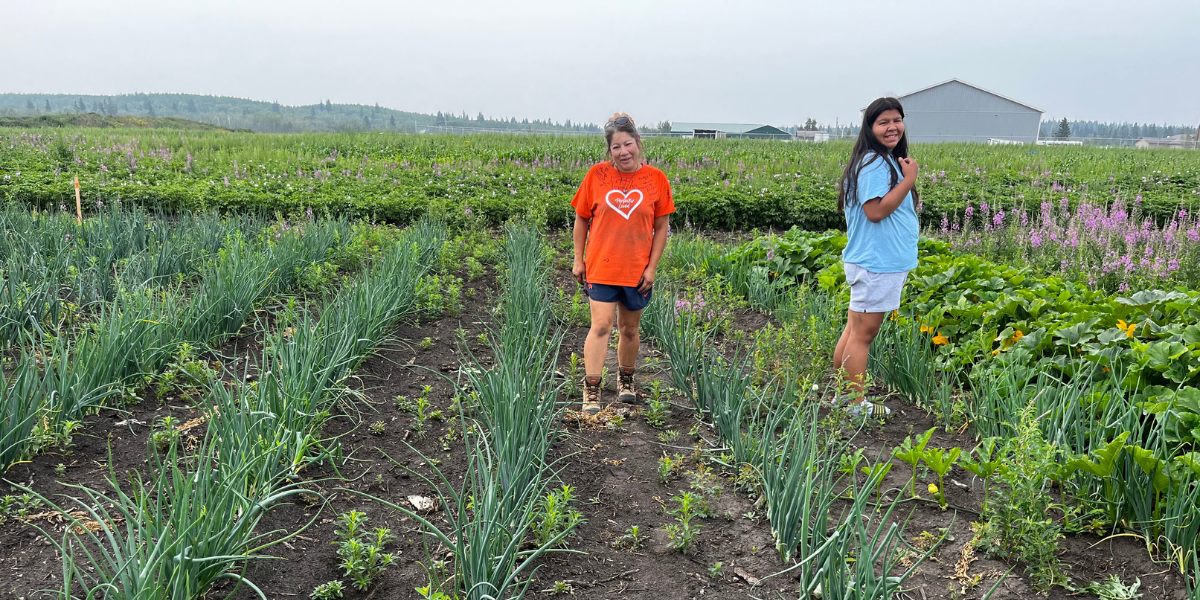
Ahtahkakoop Cree Nation’s food forest has undergone several iterations since it was founded in 2020, including a location change to bring it closer to the community and situate it on more productive land. In late winter 2022, oversight for the food forest was formalized under Ahtahkakoop Cree Nation’s Lands & Agriculture Department. Shalean Morin, Lands and Agricultural Development manager, explains that the community was “looking at ways that we could establish a bigger market garden, as part of a food sovereignty initiative. We looked at what had gone on in the past … [and] there was some really good progress and good initiatives being done, but it wasn't on a scale that would sustain a whole community.”
Aside from scaling the project and addressing sustainability, it was also important that the food sovereignty initiative was “inclusive to everybody, [and that we tried] to remove barriers of social issues, poverty, transportation,” Shalean says. “Breaking those barriers is one of the biggest reasons why we're doing this.”
Working with a small team including many community volunteers, a new site was located and 15 acres, bisected by a road, were cleared. One side was designated for the food forest where bushes and trees are being planted. “On the other side, we plant fruits and vegetables. We have corn, potatoes, quite an abundance of different fresh foods,” Shalean adds.
Getting connected back to Mother Earth, walking barefoot, hearing the beat of Mother Earth, being able to taste, feel, smell, and just really get that connection back with the land. It’s where healing starts.
CONNECTING GENERATIONS
Unlike many other First Nations, Ahtahkakoop has a growing population and a young one, with 26 per cent under age 15. Ahtahkakoop’s development plan prioritizes school nutrition, local food production, and land-based education with a strong focus on Elder-to-youth connection.
The food forest represents a pathway to reconnect generations with each other and with their roots. “In the past, First Nations people were really people of the land. Over time, some of those connections have been lost. [We’re] really taking all of that traditional knowledge and bringing it back so that we can go back to being producers and not consumers. Bringing all of [those traditions] back so we're not having to go to town and purchase food or we're not getting food brought in at higher expense,” explains Shalean.
Jake Ahenakew, the community’s Food Sovereignty Coordinator, concurs. With responsibility for monitoring all Indigenous-led food activities within the band, Jake draws inspiration from his father, who once managed community gardens in their area. For Jake, it's about more than just growing food; it's about rediscovering the knowledge that has sustained Ahtahkakoop Cree Nation for generations and passing it along to the younger generation. “We’re trying to bring more access back to traditional and medicinal ways as they're slowly being lost to modernization,” says Jake. “We’re trying to give members that access again and bring them closer to the land, bring back community engagement.”
We have to work on our little ones to get that grasp back of the purpose of Creation, why everything was created, for what purpose. We have to teach our younger people about the value of that.
Growing traditions
Whenever he can, Jake weaves tradition with newer, practical approaches to food production. Just one example is his introduction of the use of tipis as greenhouses, which help to “bring back Indigenous awareness, bring back our history,” says Jake. Tipis, made out of easily obtained materials, can be used by anyone who is growing their own backyard garden and they are also being used at a larger scale in the community garden. Not only are they an easy way to extend the growing season, but “you can go in it, sit there, and relax and reminisce,” Jake says.
Jake is looking forward to watching the traditional medicine garden, planted in the shape of a medicine wheel, grow so it can provide herbs and plants like sweetgrass, sage, tobacco, and other sacred medicines for Elders and other community members to collect and use in ceremonies. His vision is that the food forest and related areas become “a safe haven for Elders, youth and newcomers to come in, learn, get knowledge, share stories.”
Engaging the community
Already becoming a focal point for food traditions and access to healthy fruits and vegetables, the food forest and community garden are starting to reach more members of the community. “A lot of people fell away from gardening and hunting,” Jake explains, but when they see it being done on a larger scale, and successfully, “they want to [start] their own garden plots. They want to help out, they want to learn, especially young people. [They] are asking for garden plots and it's just awesome to hear."
Being in charge of our own food systems, being able to provide for ourselves, provide for others [is important]. Being able to grow our own foods and enjoy them with the community.
Shalean adds that “you can have any program running but if you don't have community buy-in, it's not going to be viable. The community engagement is really key to this.” Ahtahkakoop is looking at ways to become self-sufficient by generating their own revenue and seeking other funding. They also work across different departments, including training, employment, and education, as sources for workers, volunteers, and funding.
So far, Shalean says, “we're pretty small-scale but we do want to tie in traditional medicines, plants, roots, traditional knowledge and eventually bring in hunting and being able to provide meat and traditional foods. How to store foods, how to process foods so that if there were another natural disaster or something like COVID happened again, we can sustain ourselves, we're self-reliant.” The goal is to “go back to that self-governance, land-based knowledge, and survival.”
WANT TO LEARN MORE?
Here are some additional articles on Indigenous food sovereignty.
- Heal.Grow.Thrive: Celebrating National Indigenous History Month
- Canada: Helping Children Where It's Needed Most
- Benefits of Food Forests
- Food Forest 2023 Updates
- Building Healthy Habits from the Ground Up
- Land-based Education Lets Youth Reclaim Lost Traditions
- On the Hunt for Food Sovereignty
- Canada’s Food Guide: The Hidden History of Canada’s Nutrition Recommendations
- Best.Gift.Ever gifts:


