
July 15, 2025

Photo: Youth group in Atikameg (Whitefish Lake First Nation)
In Atikameg (Whitefish First Nation), located in Treaty 8 territory in northern Alberta, a remarkable initiative that combines Indigenous knowledge with contemporary education is taking place. Land-based learning for students in Grades 3 to 12 is an integrated outdoor and classroom-based education initiative led by Daryl, Atikameg's Land-Based Learning Lead. The curriculum is rooted in the principles of environmental stewardship, traditional practices, and community engagement.
Atikameg's students engage deeply with their natural surroundings through hands-on experiences in hunting, trapping, and fishing. Lessons from the land are brought back to the classroom and to community feasts.
Nature as Teacher
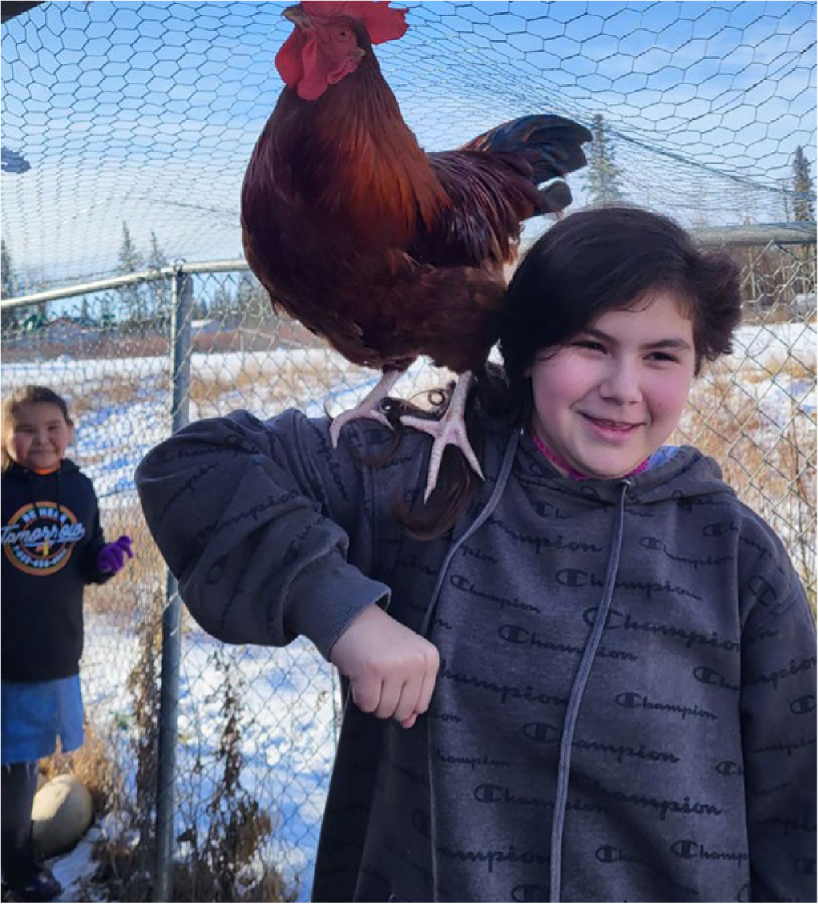
Girl in Atikameg with a chicken from the land-based learning program
In their environmental stewardship class, students actively participate in maintaining traplines and harvesting rabbits, connecting with ancestral traditions while learning essential skills for sustainable living. Rabbits, grouse, muskrat, and beavers harvested from the Boreal forest not only provide sustenance but also offer the opportunity for detailed study of anatomy, habitat, ecosystems, and their relationship to Indigenous food traditions and health.
Daryl gives the example of the differences between the two types of grouse his students have observed: “The spruce grouse eats a lot of needles, their meat is a lot darker and stronger and that type of medicine is good for our bodies, Elders especially, because they’re used to that kind of food. We took the hearts out to compare, and noticed that the spruce grouse’s heart was bigger [than the ruff grouse’s], probably because it has to pump harder to process the acid in the needles. We used scientific inquiry to make our best guess.”
We cook everything we harvest. I’ll ask [students], do you want to taste the medicine that’s in it? And talk about how healthy the traditional foods are.
Nourishing Knowledge
Food preparation is an important part of Atikameg's land-based education. From cooking outdoors to preserving food, students learn both the art and the science of preparing nourishing meals using ingredients sourced from their surroundings.
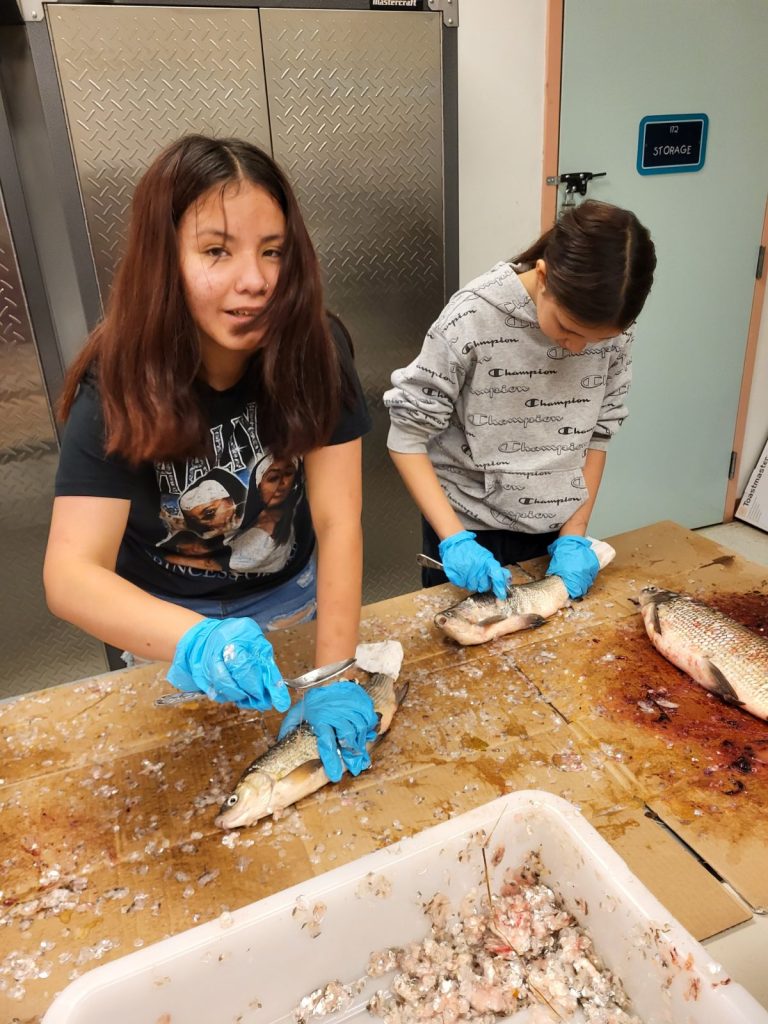
Students in Atikameg preparing fish for a community meal
At a community event held in May 2024, students served Elders a traditional meal of duck soup and baked fish, using fish the students caught. The students were excited to see Elders enjoying the food they helped prepare, and there was enough fish that Elders could take some home with them.
The meal tied back to lessons they had learned about mercury levels in local fish and the importance of informed consumption practices. Reading the findings of a study conducted on fish caught in a local lake, students applied their critical thinking skills to understand the study’s strengths and weaknesses and connect its findings to “what's happening in the fish that we're eating, and that are in their communities,” says Daryl. They also learned to use Alberta Health’s “Should I Eat This Fish?” app.
For Daryl, every interaction with the sources of food in their environment offers a teachable moment. The grow towers set up in classrooms grow a variety of green leafy vegetables and root vegetables like beets. When Daryl noticed no one was using the beet leaves, he took the time to point out that every part of the plant is edible: “I'm like, hey guys, you should be picking and eating these. I'd pick them and tell them all the different tastes: this one's sweet, and this one's kind of tart, and get them interested. Then they want to graze like me!”
Connecting with Elders and Traditions
Preparing and sharing food with their Elders connects students with their food traditions and helps them learn and appreciate their role as stewards of culture and sustainability.
Monthly Elder visits provide additional opportunities for cultural exchange, where students and staff can learn and practice the Cree language, and showcase their learning through Cree songs and traditional artwork. As students interact in meaningful ways with their Elders and their culture, there is the hope that they will be inspired to become Knowledge Keepers themselves.
The Atikameg community is deeply committed to preserving Indigenous knowledge and fostering a resilient future. They see their traditional territory as not just the land they live on but a classroom, rich with history, and a teacher who offers a lesson with every interaction.
WANT TO LEARN MORE?
- Your support makes projects like these possible. Donate today to help school nutrition programs reach more children across Canada.
- School Nutrition Programs Take the Edge off High Costs for First Nations Families
- Cultivating Health and Growth: Launch of the Project Under the Type 2 Diabetes Prevention Challenge with Indigenous Partners


