
June 13, 2024
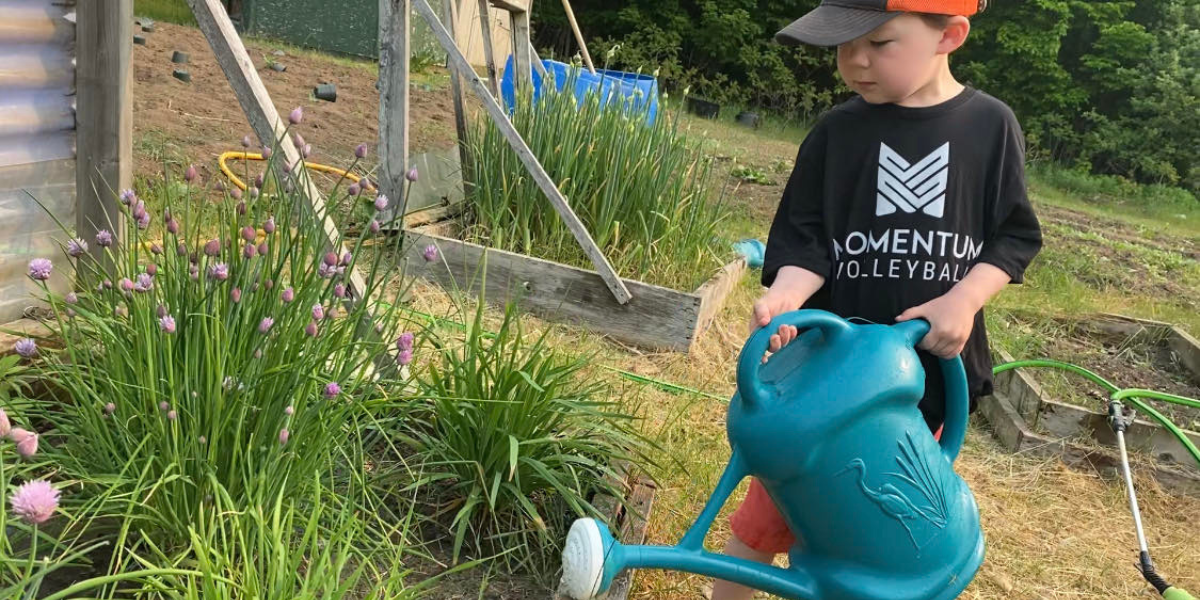
Neyaashiinigmiing (Chippewas of Nawash Unceded First Nation) continues to empower youth through Anishinaabe cultural traditions and intergenerational knowledge. This important education starts in local public schools where each class harvests and maintains garden boxes. These necessary skills engender confidence in the children as they learn to produce their own food.
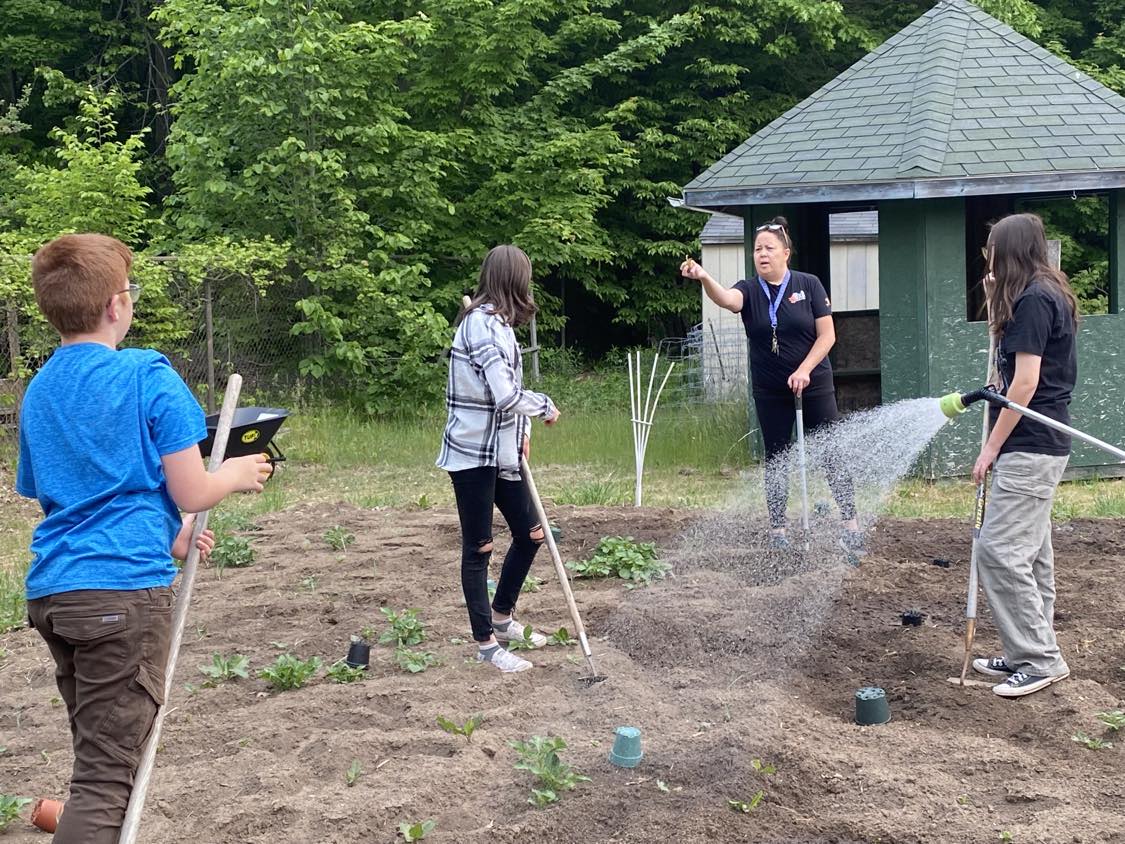
Community members work in gardens that are restoring native species
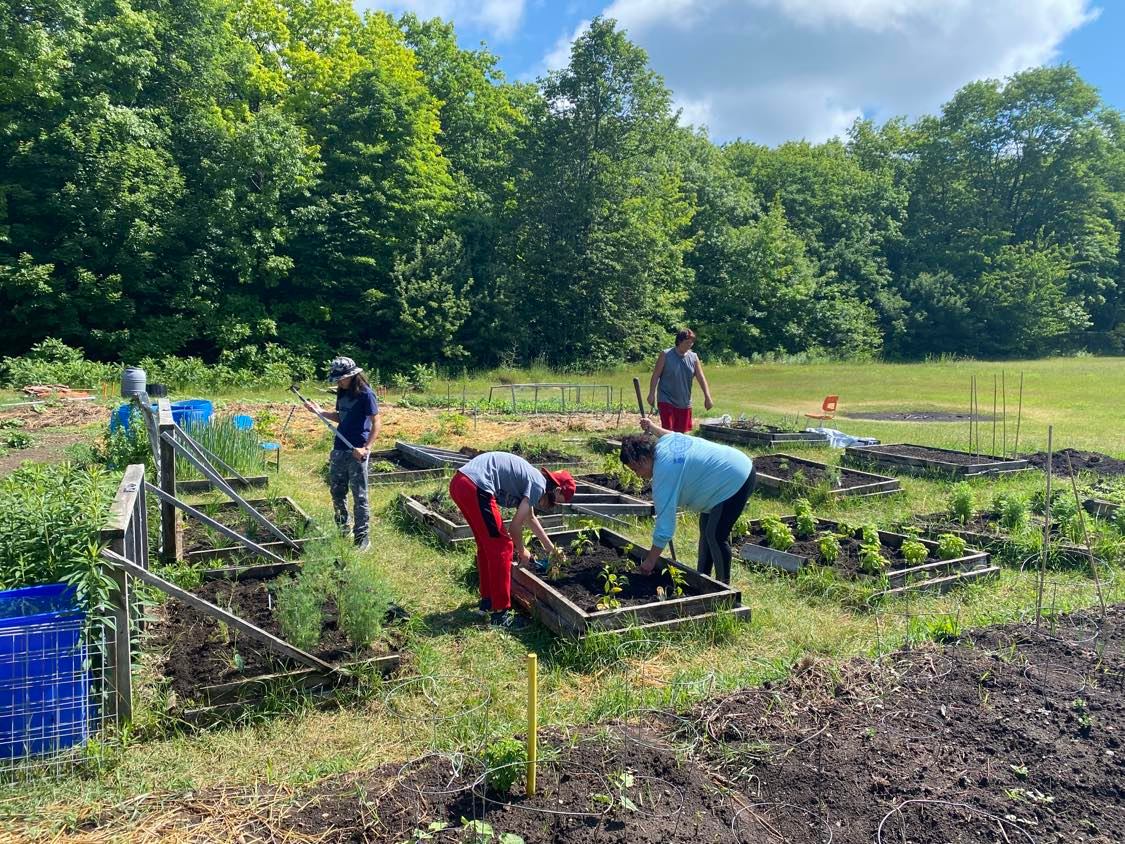
Children become “champions for change,” who play a pivotal role tending to the central community garden weekly. The leaders of the garden project have partnered with community programs to help grow and expand the community garden. This has been successful for the community in a number of ways, as youth, Elders, and community members have all been engaged to participate in the gardening activities. They have not only gained skills but they have been able to connect with each other and with their Anishinaabe food and growing traditions.
The community garden has become “a safe gathering space,” according to Dee Millar, Neyashiinigmiing’s Healthy Living Program coordinator. It’s also provided some relief from the effects of inflation. Garden produce such as potatoes, tomatoes and cucumbers have been welcome supplements to the food available to families.
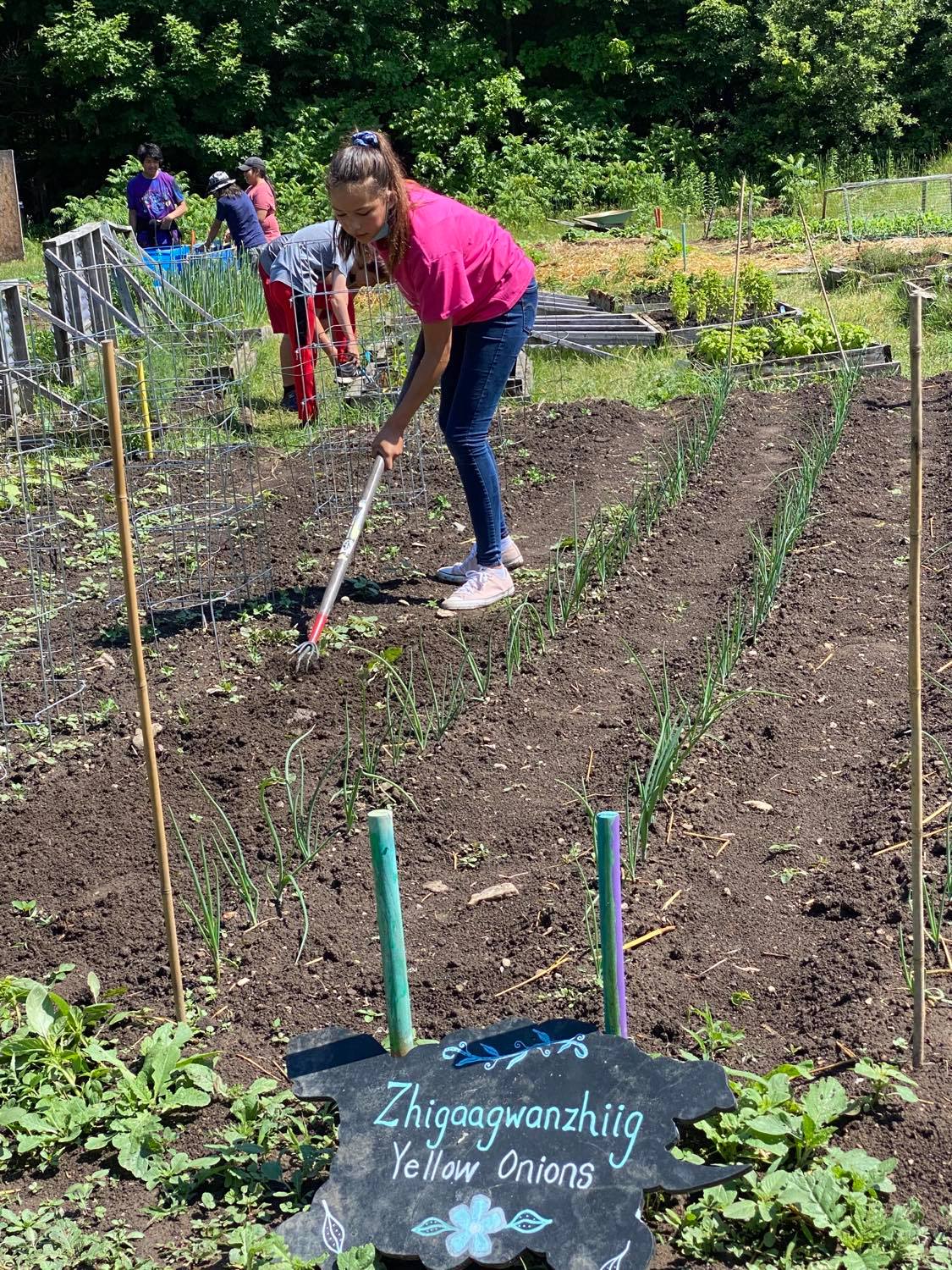
The gardens become areas for children to connect with the land and their culture
The school and community gardens are building deeper connections of kinship and ancestral knowledge among members of the community, helping them to advance food security and food sovereignty for their Nation.
Neyashiinigmiing is not only promoting traditional ways of harvesting food but also harvesting other materials, such as black ash. Before European contact, many First Nations used black ash to create baskets, canoes, snowshoes, and fish traps. Learning about the history, value and importance of black ash is imperative and timely, as black ash is under threat by invasive species.
The pride that we see in the children at the garden, the work that they’re doing, rolling up their sleeves, tending to the garden, they get to take the produce home and they are so happy. They tell me, ‘My grandma is going to be so happy.
 Elders and Knowledge Holders, working together with the community’s Species-at-Risk program, are finding ways to encourage and support the growth and sustainable harvesting of black ash and other native species upon which the people of Neyaashiinigmiing have historically relied. They are offering workshops, storytelling, and teachings on the black ash harvesting tradition.
A black ash harvest is set for spring 2024 when youth and community will take part in the clearing of trees, collection and storage of black ash. Dee will be sharing the teachings of the black ash baskets, as she was taught: “The weavers may have holes or may not be always perfect, but they are always used because they tell a story of the current circumstance and time.” She remains hopeful that black ash and its traditions will survive. “We will get through this, we will re-plant, we will come into a new season,” she says.
Because of the community's tireless work, Neyaashiinigmiing is providing the next generation with the cultural practices and wisdom to carry on their traditions.
WANT TO LEARN MORE?
Here are some additional articles on Indigenous food sovereignty.
- Heal.Grow.Thrive: Celebrating National Indigenous History Month
- Canada: Helping Children Where It's Needed Most
- Benefits of Food Forests
- Food Forest 2023 Updates
- Building Healthy Habits from the Ground Up
- Land-based Education Lets Youth Reclaim Lost Traditions
- On the Hunt for Food Sovereignty
- Canada’s Food Guide: The Hidden History of Canada’s Nutrition Recommendations
- Best.Gift.Ever gifts:


